Trusted Check Engine Light Diagnostics Near Auburn Hills MI Since 1932
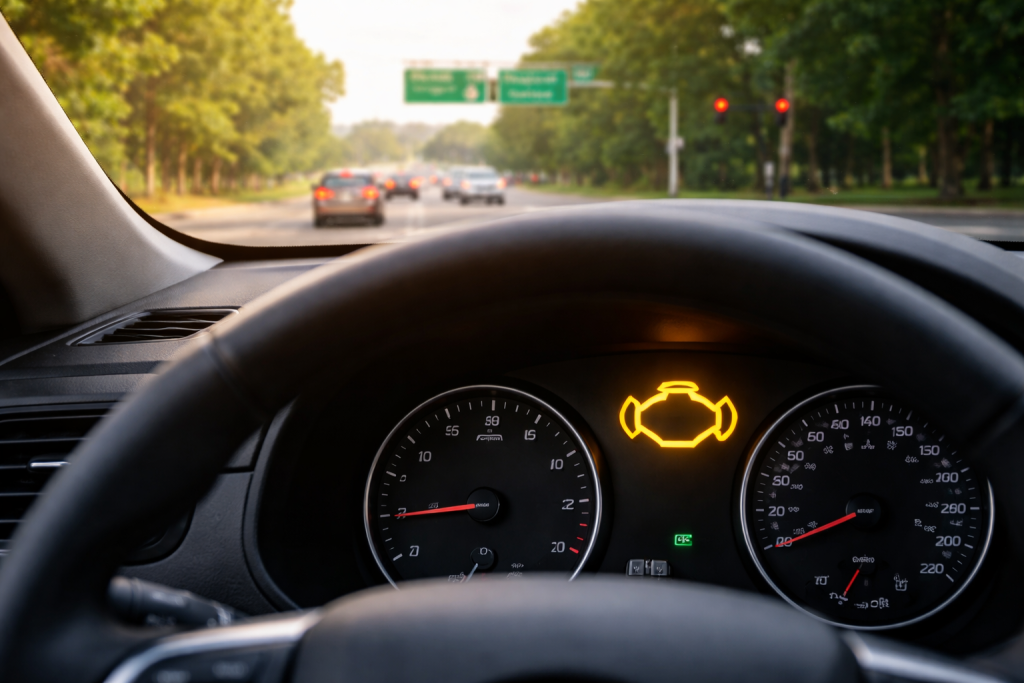
It usually happens without warning. One moment everything feels normal, and the next you’re staring at a check engine light with no clear idea what changed. For most drivers, that single light raises a lot of uncertainty. Is it something small, or the beginning of a bigger problem?
At Fenkell Automotive in Auburn Hills, MI, this situation is something we see every day. Since 1932, drivers across Auburn Hills, Troy, Pontiac, Rochester Hills, Waterford, and Bloomfield Hills have relied on accurate diagnostics and clear answers when warning lights appear.
The most important thing to understand is this: the check engine light is not the problem itself. It is your vehicle’s early warning system, and what matters most is identifying the root cause correctly the first time.
Check Engine Light Diagnostics in Auburn Hills MI: What the Warning Light Really Means
Modern vehicles are equipped with an onboard computer system called OBD-II. This system constantly monitors engine performance, fuel delivery, emissions, and sensor activity, which is why accurate electronic diagnostics are critical when warning lights appear, following standardized vehicle monitoring systems used across the industry. When something operates outside of its expected range, the system stores a fault and turns on the check engine light.
This does not automatically mean a part has failed. In many cases, it means the system has detected a condition that needs further testing. That distinction is where most costly mistakes begin.
There are two levels of urgency you need to recognize. A solid light usually indicates a fault that should be addressed soon but may not require immediate action. A flashing light signals an active misfire, meaning fuel is not being burned correctly and damage is occurring in real time.
Many drivers do not realize how quickly damage can happen in these situations. A flashing light can lead to catalytic converter failure in a short amount of driving, especially when unburned fuel enters the exhaust system and overheats critical emissions components.
Why Is My Check Engine Light On in Auburn Hills MI?
When the check engine light comes on, it is natural to look for a quick answer. While certain issues show up more often than others, the reality is that the stored code only points to a system, not a specific failed part.
A loose gas cap can trigger the light by allowing fuel vapors to escape. Oxygen sensor faults are also common, but those sensors often report problems happening elsewhere rather than being the cause themselves.
Engine misfires are another frequent issue. These can come from worn spark plugs, failing ignition coils, fuel injector problems, or even vacuum leaks. Without testing, there is no reliable way to determine which component is responsible.
Catalytic converter efficiency codes are often misunderstood. Many assume the converter has failed, but in reality, these codes are frequently caused by long-term engine performance issues such as misfires or incorrect fuel mixtures.
Lean condition codes indicate the engine is receiving too much air and not enough fuel. This can result from intake leaks, fuel delivery issues, or sensor inaccuracies.
👉 A code points you in the right direction, but it does not tell you what to replace.
Diagnostic Case Study
A customer recently came in from Troy with a check engine light and a P0420 code. They had already been told that the catalytic converter needed to be replaced. The vehicle was still driving normally, so they wanted a second opinion before committing to that repair.
During diagnostics, we found the converter itself was not the root problem. The vehicle had a subtle misfire under load that was not obvious during normal driving. Over time, that misfire allowed unburned fuel into the exhaust, which triggered the efficiency code.
Fixing the ignition issue resolved the problem without replacing the catalytic converter. This type of situation happens more often than most drivers expect, and it highlights why testing matters more than guessing.
Can You Drive With a Check Engine Light On in Auburn Hills MI?
Whether you can continue driving depends on how the vehicle is behaving and the type of warning you are seeing.
If the light is solid and the vehicle feels normal, you may be able to drive short distances without immediate risk. However, that does not mean the issue should be ignored. Even small problems can affect fuel efficiency and lead to larger repairs over time.
If you are planning a long drive, highway travel, or towing, it is best to have the vehicle checked first. Issues that seem minor during short trips can become more noticeable under sustained load.
A flashing check engine light is a different situation. This usually indicates an active misfire. Drivers may notice shaking, loss of power, or unusual smells. Continuing to drive under these conditions can quickly overheat and damage the catalytic converter.
A simple guideline is this: a solid light means schedule a diagnostic soon, while a flashing light means stop driving and address it immediately.
Why a Check Engine Light Code Does Not Tell You What to Fix
Basic code readers can retrieve fault codes, but they often create confusion. Seeing a message like “oxygen sensor fault” leads many drivers to replace that sensor right away.
In reality, codes identify where the system detected a problem, not which part failed. An oxygen sensor code could be caused by an exhaust leak, wiring issue, or imbalance in the air fuel mixture.
One of the most common mistakes drivers make is replacing the same part more than once because the same code returns. This usually happens because the original cause was never identified.
Codes also fall into different categories. Stored codes confirm a problem has occurred. Pending codes indicate an issue that may be developing. Active codes represent faults currently affecting operation.
Intermittent issues can be especially difficult because they may not appear during every drive cycle. Clearing codes without fixing the problem only resets the warning temporarily.
Proper diagnostics require verifying the system, not just reading the code. Many misfires only appear during cold starts or under load, which is why they can go unnoticed until the system detects a pattern.
Check Engine Light Diagnostics Near Me in Auburn Hills MI
Accurate diagnostics involve a structured process rather than guesswork.
The first step is retrieving codes and freeze frame data. This information shows the conditions under which the fault occurred, such as engine temperature, speed, and load.
Next comes live data analysis. Technicians monitor sensor readings, fuel trims, and system behavior in real time to understand how the vehicle is operating.
A physical inspection follows, checking for issues like damaged wiring, vacuum leaks, or worn components. Additional testing may include fuel pressure checks, ignition testing, and emissions system evaluation.
The final step is confirming the root cause before any repair is made. In our experience, most diagnostic problems come down to incomplete testing rather than complex failures.
What Happens If You Ignore a Check Engine Light in Auburn Hills, Troy, and Pontiac MI
Ignoring a check engine light is one of the most expensive decisions a driver can make.
A vehicle with a mild misfire may still feel drivable at first. Over time, that misfire sends unburned fuel into the exhaust system, overheating the catalytic converter. Eventually, the converter fails.
What many drivers do not realize is that by the time performance noticeably changes, the underlying issue has often been present for weeks or even months.
Early on, you may only notice slight drops in fuel efficiency or occasional hesitation. As the problem progresses, performance declines and repair costs increase.
A catalytic converter replacement can cost significantly more than fixing the original issue early, which is why timely diagnostics matter.
How Fenkell Automotive Delivers Accurate Check Engine Light Diagnostics Near Auburn Hills MI
Most vehicles we see with a check engine light have already had at least one part replaced before arriving. In many cases, the issue comes down to incomplete testing rather than a complicated failure.
At Fenkell Automotive, the focus is on identifying the true cause of the problem before recommending repairs. Advanced diagnostic equipment and experienced technicians allow us to evaluate the entire system rather than relying on assumptions, supported by a team of skilled professionals who bring years of hands-on experience to every diagnosis.
Clear communication is also part of the process. Drivers are shown what is happening, why it is happening, and what needs to be done to fix it correctly.
This approach helps prevent repeat repairs and unnecessary costs.
How to Prevent Check Engine Light Issues in Auburn Hills MI Vehicles
Many check engine light issues develop gradually rather than appearing overnight.
We often see vehicles come in with small issues that could have been caught earlier during routine inspections. Minor vacuum leaks, early sensor drift, or small fuel system imbalances do not usually cause noticeable symptoms right away, but they eventually trigger a warning light.
If your driving is mostly short trips around Auburn Hills, your engine may not consistently reach full operating temperature. This can contribute to carbon buildup and increase the likelihood of emissions related issues over time.
Regular inspections and paying attention to subtle changes in performance can help catch problems early and reduce long-term repair costs.
Check Engine Light FAQs in Auburn Hills MI
Why is my check engine light on?
It indicates that your vehicle’s computer has detected a fault in the engine, fuel system, or emissions system that requires diagnosis.
Can I drive with it on?
You may be able to drive short-term if the light is solid and the vehicle feels normal, but a flashing light requires immediate attention.
What does a flashing light mean?
It usually indicates an active misfire that can cause engine or catalytic converter damage.
How much does diagnostics cost?
Costs vary depending on the complexity of the issue, but accurate diagnostics typically prevent unnecessary repairs and save money over time.
How long does it take?
Most diagnostic processes take one to two hours, depending on the issue.
Will it fail emissions testing?
Yes, most check engine light conditions will result in a failed emissions test.
Call Now for Check Engine Light Diagnostics Near Auburn Hills MI
A check engine light is an early warning. Addressing it now can prevent more serious and expensive repairs later.
If you are searching for check engine light diagnostics in Auburn Hills MI or need a reliable auto repair shop near you, the first step is getting an accurate diagnosis.
Call (248) 276-6450 to schedule your diagnostic appointment.
Fenkell Automotive proudly serves Auburn Hills, Troy, Pontiac, Rochester Hills, Waterford, and Bloomfield Hills with accurate answers and reliable repairs. You can stay connected through our local Facebook page or visit us at 2670 Auburn Ct, Auburn Hills, MI 48326