
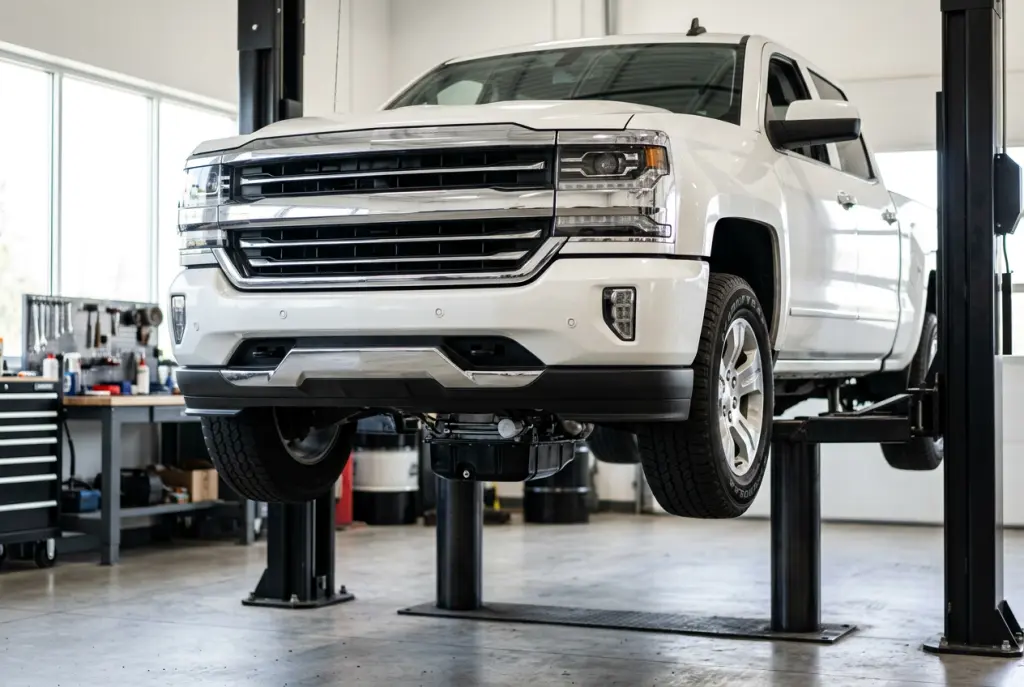
A shudder, “chuggle,” or hard clunk from your GM 8-speed transmission is commonly diagnosed as a torque-converter shudder or valve-body issue related to fluid specification. It is most commonly reported on roughly 2015-2019 Silverado, Sierra, Camaro, Corvette, and Escalade models equipped with the 8L90 or 8L45 (8-speed) automatic transmission. The first step in the repair is a drain-and-fill with the correct low-viscosity fluid. If that does not resolve it, the valve body is the next component to evaluate.
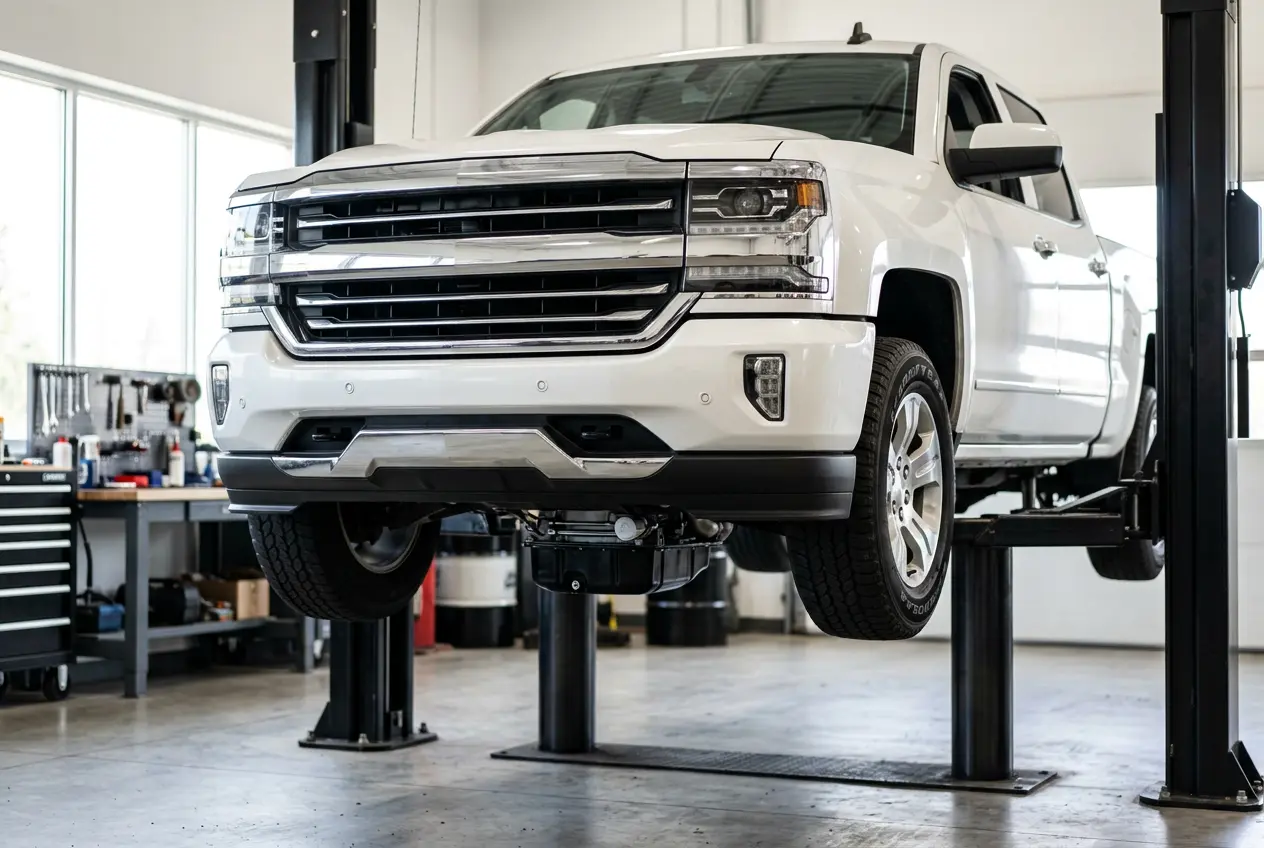
Which GM vehicles are commonly affected?
The shudder and hard-shift complaints are commonly reported on roughly 2015-2019 models that use the 8L90 or 8L45 8-speed automatic. That includes:
- Chevrolet Silverado 1500 (2015-2019)
- GMC Sierra 1500 (2015-2019)
- Chevrolet Camaro (2016-2019, V6 and V8)
- Chevrolet Corvette (2015-2019)
- Cadillac Escalade and Escalade ESV (2015-2019)
- And related GM trucks and SUVs from the same era
If your vehicle is in this range and you feel a vibration or shudder at light throttle between roughly 25 and 50 mph, the 8-speed is the first place to look.
What does the shudder actually feel like?
Drivers describe it a few different ways. The most common is a rapid vibration or “chuggle” at light throttle, usually between 25 and 50 mph, that feels like driving over rumble strips. Some owners also notice a hard clunk on the 1-2 upshift or on downshifts when slowing for a light. A few describe it as the truck “hunting” for a gear at highway speeds.
These symptoms can be subtle at first and easy to write off as road texture. The freeze-thaw cycle and road salt saturation that Michigan winters put on roads around Auburn Hills and Oakland County are hard on drivetrains, and a shudder that starts mild tends to get worse if the fluid condition is ignored.
What causes the 8L90 and 8L45 shudder?
The issue is commonly diagnosed as torque-converter shudder combined with valve-body sensitivity to fluid specification. The 8-speed uses a very specific low-viscosity fluid. When the wrong fluid is used, or when the correct fluid breaks down over time, the torque converter clutch does not release and apply smoothly. That produces the shudder. The valve body, which controls hydraulic pressure and shift timing, can also wear in a way that makes hard shifts and clunks worse.
GM addressed this shudder in service bulletin 18-NA-355, which calls for a fluid exchange with the updated low-viscosity fluid. Check your VIN at nhtsa.gov/recalls and ask your GM dealer whether any coverage applies before paying out of pocket.
How does the repair progress if you ignore it?
Symptom stages tend to follow a pattern:
- Early: Mild vibration or chuggle at light throttle between 25-50 mph. Easy to dismiss. Fluid is the likely fix at this stage.
- Mid: Shudder becomes more consistent. Hard clunks on 1-2 upshift or during deceleration. The valve body may now be involved.
- Late: Harsh shifts at multiple points in the gear range, possible slip or hesitation. Torque converter clutch wear is likely. Repair cost rises significantly.
Catching it early, when a fluid drain-and-fill may resolve the problem, is far less expensive than waiting until the valve body or torque converter needs replacement.
Is it safe to keep driving with the shudder?
The 8-speed shudder is not an immediate safety emergency the way a brake failure or steering problem would be. Short local trips are generally manageable. That said, continued driving with a shuddering torque converter accelerates clutch pack wear and can damage the valve body further. The longer you wait, the more expensive the repair tends to become. Get it diagnosed soon.
What does the repair involve?
The standard procedure for this complaint follows two steps:
- Fluid drain-and-fill: The transmission pan is dropped, the old fluid is drained, the filter is inspected, and the unit is refilled with the correct low-viscosity specification fluid. A road test confirms whether the shudder clears.
- Valve body replacement or reprogramming: If the fluid change does not resolve the shudder, or if hard shifts persist, the valve body is removed, inspected, and replaced or updated as needed. This is a more involved repair that requires the transmission to be partially disassembled.
In some cases, a torque converter replacement is also needed if the clutch pack is already worn. The road test after each step determines what comes next.

What does this repair typically cost, and what moves the price?
No exact price is possible without inspecting the vehicle, but here is what drives the range:
| Repair Step | Likely Cause Addressed | Urgency |
|---|---|---|
| Fluid drain-and-fill (correct spec) | Fluid degradation, wrong fluid type | Address soon |
| Valve body replacement | Worn valve body causing hard shifts | Address soon; cost rises if delayed |
| Torque converter replacement | Clutch pack wear from prolonged shudder | Required if fluid fix fails |
| TCM relearn / reprogramming | Shift quality after mechanical repair | Required after valve body work |
The fluid service alone is the lowest-cost step. Valve-body work adds labor and parts. If the torque converter is worn, the cost increases substantially because the transmission must come out of the vehicle. An exact quote requires a road test and fluid inspection first.
If your truck or SUV is also showing signs of slipping between gears, see our post on transmission slipping in Auburn Hills for more on what those early warning signs mean. For a full diagnosis and repair, visit our transmission repair page.
Frequently Asked Questions
Is the 8-speed shudder covered under any GM program?
GM addressed this shudder in service bulletin 18-NA-355, which calls for a fluid exchange with the updated low-viscosity fluid. Check your VIN at nhtsa.gov/recalls and ask your GM dealer whether any coverage applies before paying out of pocket.
Can I keep driving with the shudder?
Short trips are generally possible, but continued driving with a shuddering or hard-shifting transmission accelerates wear on the torque converter and valve body. Get it diagnosed soon rather than waiting until the problem worsens.
Will a fluid flush alone fix the shudder?
Sometimes. A drain-and-fill with the correct low-viscosity fluid is the first step and resolves the shudder in many cases. If the valve body is already worn, a fluid change alone may not be enough and further diagnosis is needed.
Which GM vehicles use the 8L90 or 8L45 transmission?
The 8L90 and 8L45 8-speed automatics are commonly reported in the 2015-2019 Silverado, Sierra, Camaro, Corvette, and Escalade, among other GM trucks and SUVs from that era.
How long does the fluid flush and valve-body repair take?
A fluid drain-and-fill typically takes one to two hours. If the valve body needs replacement or reprogramming, plan for a full day. Fenkell offers a free shuttle and a 24-hour drop box if you need to leave the vehicle overnight.
Schedule Your Diagnosis at Fenkell Automotive Repair
Brian Taranto, owner of Fenkell Automotive Repair, and the Fenkell team will road-test your vehicle, pull the fluid for inspection, and give you a straight answer on what your 8-speed needs. Fenkell accepts all aftermarket warranties and handles all the paperwork so you do not have to make a single phone call. Every repair comes backed by our 24-month/24,000-mile nationwide warranty.
(248) 276-6450 | Schedule Online
Hours: Monday through Friday, 8:00 am to 5:00 pm. 24-hour drop box available. Free shuttle available.
Serving the Auburn Hills area, including Troy and Waterford. Also convenient to Bloomfield Hills and the surrounding Oakland County area.